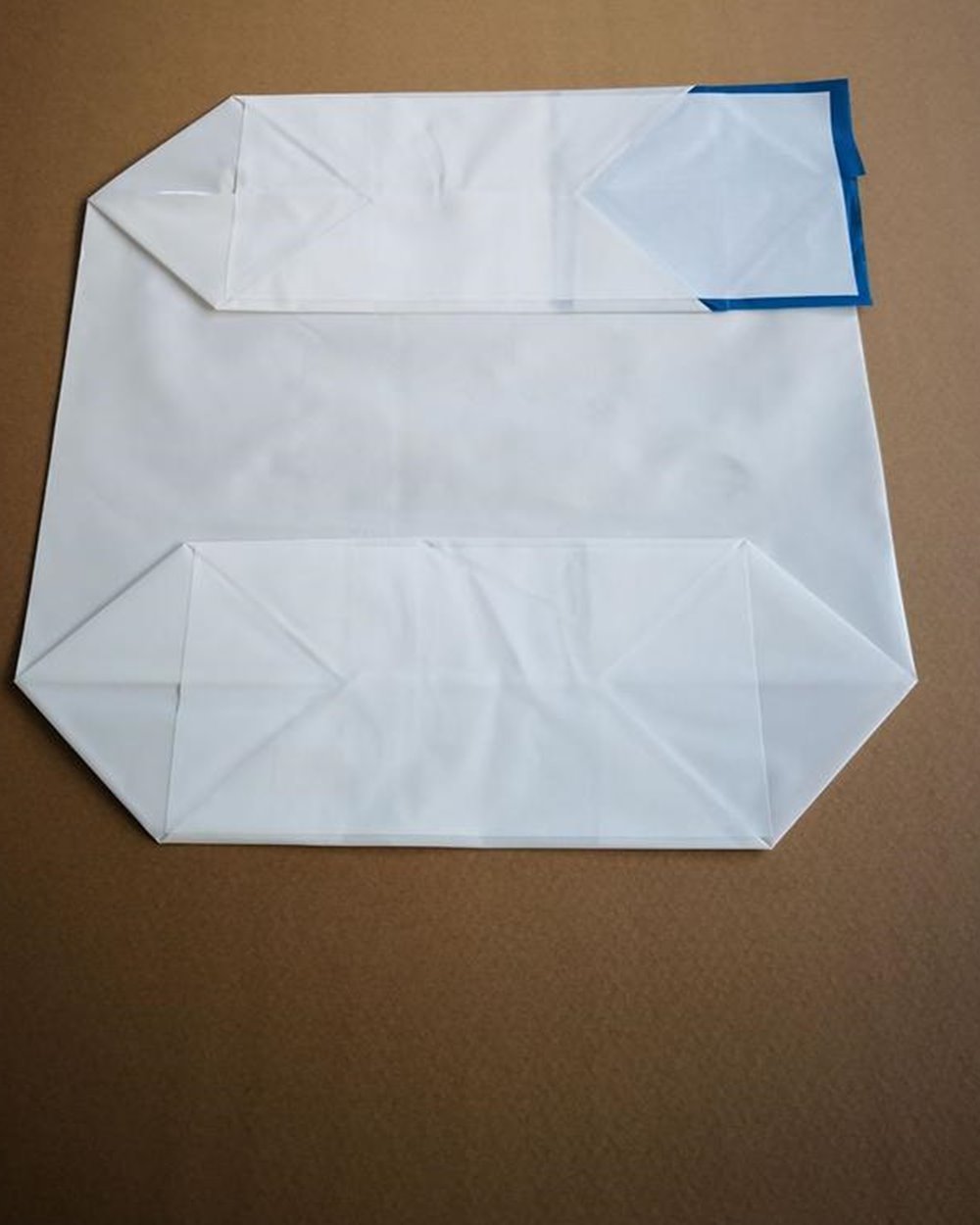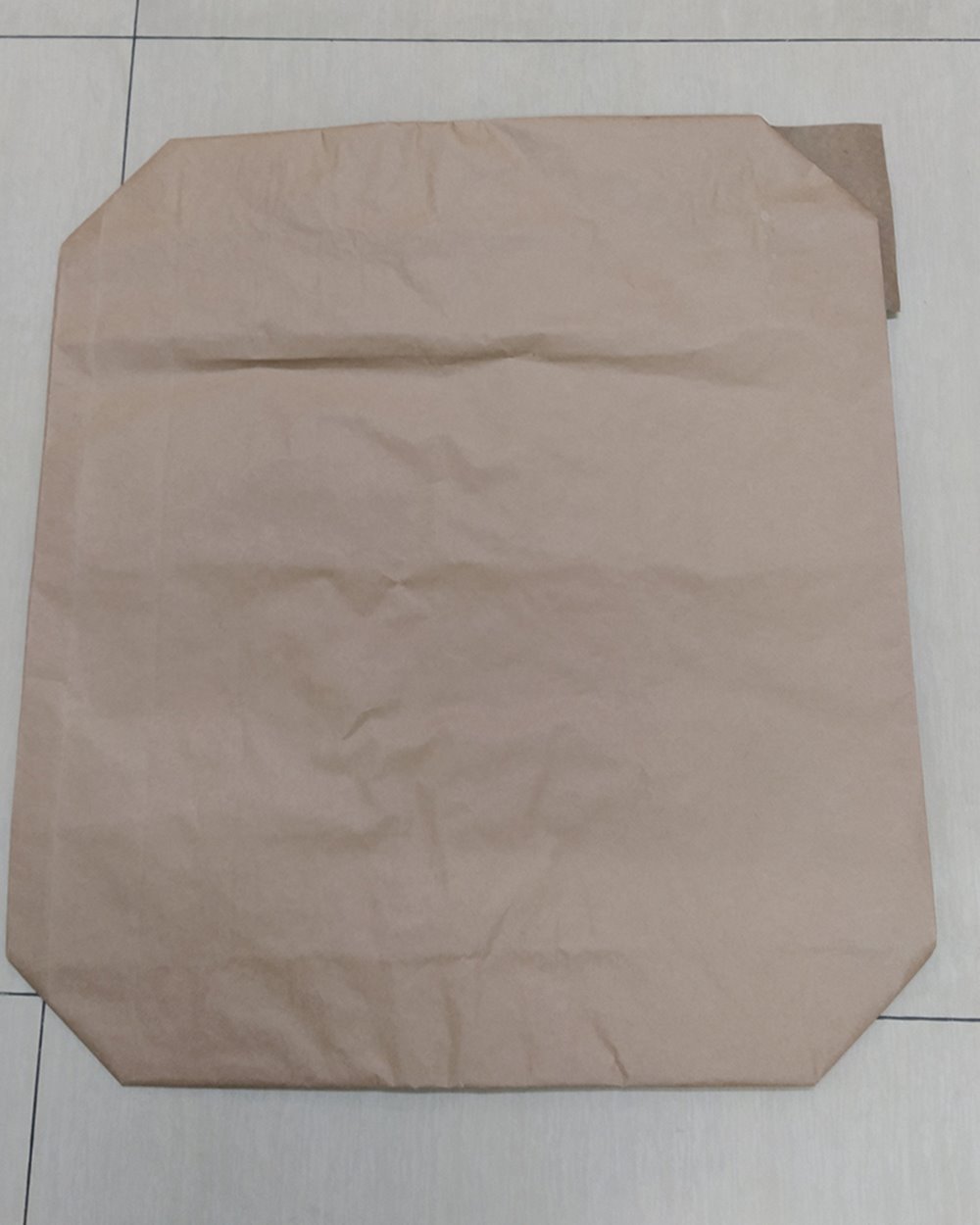
A valve bag is a fitted component. The valve is not a hole; it is a small, shaped opening that has to mate with a filling spout, open under product flow and close itself before the bag leaves the line. Get the valve wrong and everything else becomes secondary.
The valve is the specification
Buyers often start with bag dimensions and print. Those matter, but the valve determines whether the bag can be filled at all. A valve that is too tight slows the line; too loose and product blows back through the opening. A sleeve that is too short may not reach the spout; too long and it can fold or block.
The valve also controls dust. On fine powders, the wrong valve geometry creates a cloud at the spout, loses product and creates a cleaning problem. On high-speed lines, the valve and venting have to keep up with the fill rate.
The eight inputs we need
- Product and bulk density. A 25 kg fill of cement and a 25 kg fill of vermiculite need very different bag volumes. Bulk density drives the dimensions more than weight alone.
- Fill weight. The target net weight, plus the acceptable filling tolerance.
- Bag dimensions. Width, length, gusset and bottom style — or a sample of the current bag.
- Spout type and diameter. The packer spout is the fixed point. The valve must fit it, including any seal or clamp.
- Fill rate. Bags per minute and product flow rate affect the valve opening and venting.
- De-aeration and venting. Fine powders hold air. The bag may need micro-perforation, a vent or a specific fill technique.
- Pallet pattern. Bag shape, stiffness and anti-slip determine how the pallet stacks and whether it survives transport.
- Storage and transport. Humidity, sunlight, stacking height and handling method decide the barrier and strength requirements.
Valve types and what they suit
| Valve type | How it works | Typical fit | Watch-outs |
|---|---|---|---|
| Internal sleeve | A sleeve inside the bag opens around the spout and closes under product pressure | High-speed packers, fine powders, paper and film bags | Sleeve length and material must match the spout; poor fit can cause dust |
| Corner valve | The filling opening sits at the top corner of the bag | PE and PP bags, simpler filling lines | Bag orientation matters; corner stress needs a strong seal |
| Pasted valve | A paper valve is pasted into the top seam | Multiwall paper bags, cement, mortar, flour | Paper stiffness and valve geometry affect opening and closure |
There is no universal “best” valve. The right choice depends on the packer, the product and the bag material. If you are unsure, send a photo of the spout and the current bag — that is usually enough to narrow the options.
Dimensions: do not scale from fill weight
Two 25 kg products can need different bag sizes. Bulk density, particle shape and fill ratio determine the volume. A bag that is too small bulges and stresses the seams; too large and the product shifts, the pallet is unstable and the bag looks underfilled.
Dimensions also interact with the valve. Moving the valve or changing the gusset can change how the bag sits on the spout. Start from a physical sample or a dimensioned drawing, then confirm the volume with the actual product.
For a new product, a fill trial is more reliable than a calculation. We ask for 20–50 kg of product and run it through the intended line or a comparable setup.
A sample trial that tests the line
A sample that looks right on a table proves very little. A useful trial tests the bag under production conditions:
- Run at production speed, not a slow demonstration setting.
- Check fill weight variation across at least 20 bags.
- Watch the valve for dust, product blowback and closure.
- Drop filled bags on the base, side and corner.
- Stack to the intended pallet height and leave for 24 hours.
- Inspect the print for position, adhesion and rub-off.
Record what changed: valve fit, bag shape, fill time, dust, seam condition. A sample trial is only useful if the observations feed back into the specification.
Common failure modes and what they usually mean
| Symptom | Likely cause | What to review |
|---|---|---|
| Product leaks at the valve | Spout/valve mismatch, short sleeve or poor closure | Valve type, sleeve length, spout diameter, fill rate |
| Bag does not stand | Bottom or gusset design, film too soft, underfilled | Block-bottom geometry, film stiffness, fill weight |
| Seam failure | Seal parameters, contamination or incompatible layers | Seal temperature/pressure, film structure, quality checks |
| Print rubs off | Ink/substrate mismatch or insufficient drying | Ink system, corona treatment, adhesion test |
| Bag bulges or bursts | Volume too small, fill weight too high, poor de-aeration | Dimensions, fill ratio, venting, product density |
Specification checklist
- Product name, bulk density and particle size
- Net fill weight and tolerance
- Current bag sample or dimensioned drawing
- Spout type, diameter and photo
- Line speed and filling method
- Venting or de-aeration requirement
- Pallet pattern and stack height
- Storage climate and transport mode
- Print artwork and colour requirements
- Quantity, destination and delivery date
Bottom line
Specify the valve with the spout, the dimensions with the product, and the material with the storage conditions. Then test the combination on the line. A valve bag is a fitted component — treat it like one and the leaker rate becomes a manageable number, not a surprise.
A sample that is not run at production speed is a shape, not a test.