Most valve-bag comparisons start with the material. That is the wrong end. The product determines the barrier, the filling line determines the valve, and the market determines the print. The material is the answer, not the starting point.
Start with the product
Two products that weigh the same can need completely different bags. A 25 kg bag of cement is dense, free-flowing and dusty. A 25 kg bag of vermiculite is bulky, light and fragile. A 25 kg bag of resin pellets is free-flowing but sensitive to moisture. A 25 kg bag of flour is food-contact, grease-sensitive and often printed for retail.
Before comparing PE, PP and paper, answer four questions:
- Is the product moisture-sensitive? If it cakes, hydrates or loses flowability in humid air, start with a barrier structure.
- How heavy and how abrasive is the load? Sharp minerals and heavy fertilizer loads put more demand on tensile and puncture resistance.
- Does the product need to breathe? Some agricultural products release moisture and perform better in a breathable bag.
- What does the market expect to see? Cement, mortar and retail flour often need a paper surface. Industrial resin buyers usually care more about barrier and clean filling.
The four structures at a glance
| Structure | Moisture barrier | Strength | Best for | |
|---|---|---|---|---|
| PE film | Excellent | Good | Good, up to 6 colours | Resins, chemicals, food powders, pellets |
| PP woven | Good when laminated | Excellent | Excellent with BOPP | Fertilizer, grain, feed, minerals |
| Paper-plastic composite | Good | Very good | Very good on paper face | Cement, chemicals, flour, minerals |
| Multiwall paper | Moderate; coating improves | Good | Excellent, matte | Cement, mortar, flour, sugar |
PE valve bags: when moisture is the enemy
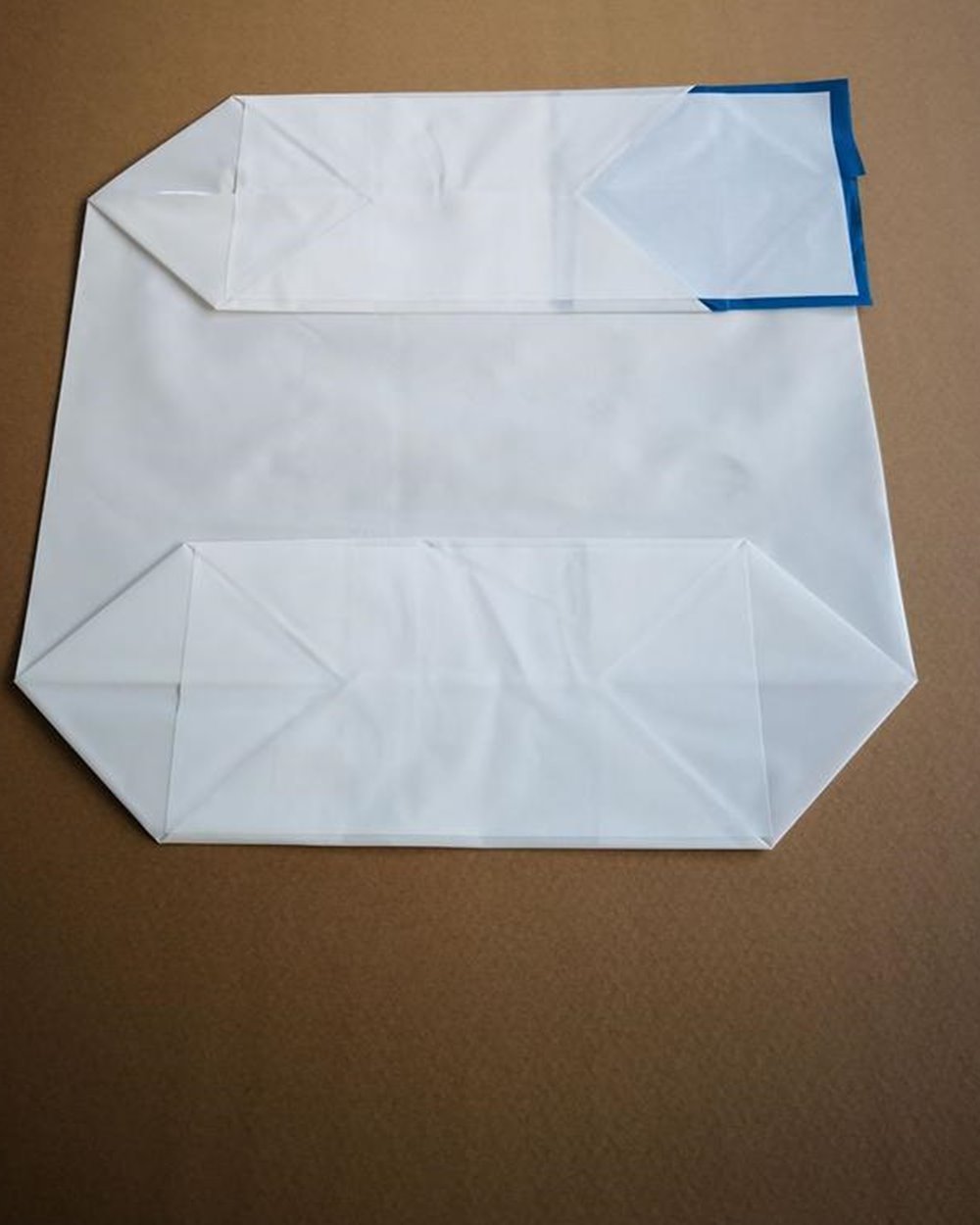
PE valve bags are made from co-extruded polyethylene film, typically 60–180 μm. The film is continuous, so it gives a strong moisture barrier and contains fine dust. The valve is welded into the bag and closes under product pressure.
PE is the natural starting point for hygroscopic powders, polymer pellets, food ingredients and chemicals that must stay dry. It also gives a clean, bright print surface and can be embossed for anti-slip.
Watch-outs: PE is not as stiff as paper, so very high stacks may need a block-bottom design and a stiffer film. Some products are packed hot, which can affect seal integrity. And a mixed PE/paper structure is harder to recycle than a mono-material PE bag.
Choose PE when: the product cakes in humidity, the filling line needs a clean self-closing valve, or the buyer wants a moisture barrier with a modern print finish.
PP woven valve bags: strength and cost
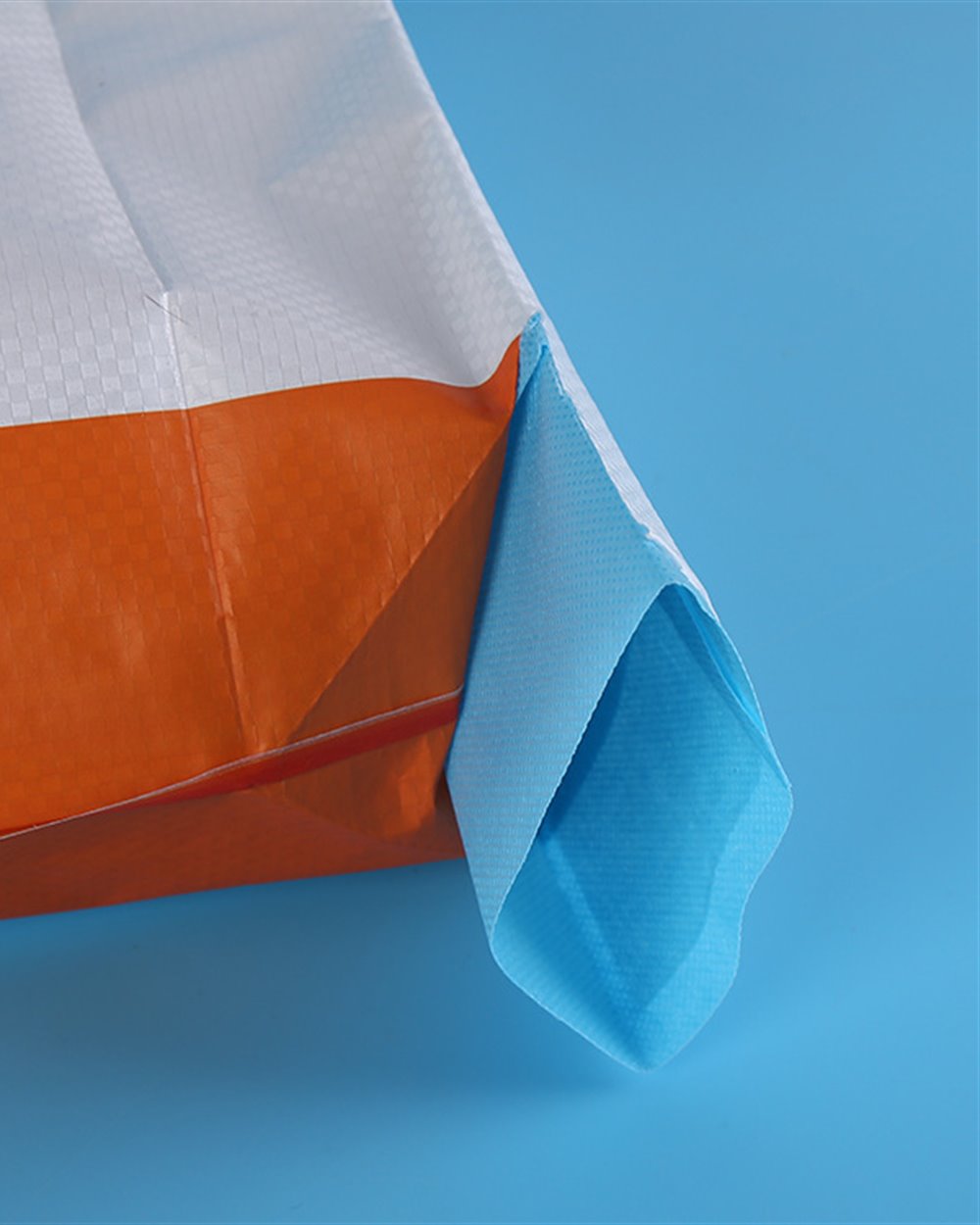
PP woven bags use a fabric woven from polypropylene tapes, usually 70–120 g/m². The fabric carries high loads and resists tearing. A PE or BOPP lamination can be added for moisture protection and a smooth print surface; uncoated fabric stays breathable.
PP woven is common for fertilizer, grain, feed, salt, sugar and minerals. It is tough, packs flat before filling and is cost-effective at volume.
Watch-outs: uncoated woven fabric is not a moisture barrier. If the product needs protection, specify lamination. BOPP lamination gives the best print, but it adds cost. The fabric texture also limits fine detail unless it is laminated.
Choose PP woven when: the load is heavy or abrasive, the product benefits from breathability, or the budget is tight and a barrier is not essential.
Paper-plastic composite: the middle path
A paper-plastic composite pairs a kraft paper face with a PE film or PP woven core. The paper gives stiffness, a premium matte surface and good print. The plastic layer adds tear resistance and moisture protection.
This structure is often used for cement, mortar, gypsum, chemical powders and flour. It can be a practical middle ground when full multiwall paper is more than the product needs, but plain PE is too soft or too plastic-looking for the market.
Watch-outs: mixed paper/plastic layers are not always accepted in paper recycling. Lamination quality matters — a poor bond can delaminate at the valve or on the pallet. Print on kraft shifts colour compared with white paper.
Choose a composite when: you need paper-like presentation and stiffness plus a moisture barrier, at a cost below a heavy multiwall paper construction.
Multiwall paper: stack strength and premium print
Multiwall paper valve bags are built from two to five plies of sack kraft paper, typically 70–90 g/m² per ply. The plies work together to give stack strength, puncture resistance and a stable filled shape. Paper also takes a sharp, matte print that suits building materials and retail flour.
The material is breathable by nature, which helps with products that release air or moisture. Coatings, liners or a PE-free barrier can be added when the product needs protection.
Watch-outs: paper loses strength when wet, so humid storage needs a barrier or liner. Heavy 50 kg builds need more plies and a well-matched valve. Paper is usually not the lowest-cost option per bag, although the cost per tonne of product can still be competitive.
Choose multiwall paper when: stack strength, premium print and paper recovery matter — especially for cement, dry mortar, gypsum, flour and sugar.
A product-by-product starting point
| Product | Typical starting point | Why |
|---|---|---|
| Cement / dry mortar | 3–4 ply multiwall paper or paper-plastic | Stack strength, dust control, premium print |
| Fertilizer | PE or laminated PP woven | Moisture barrier and UV protection |
| Resin / pellets | PE | Moisture barrier, clean filling, anti-slip |
| Flour / food powder | Multiwall paper or PE | Food contact, grease barrier, print |
| Chemicals / minerals | PE or paper-plastic | Puncture resistance and dust control |
| Feed / grain | PP woven or paper-plastic | Toughness, breathability, cost |
This is a starting point, not a specification. Bulk density, filling speed, storage and destination can change the recommendation.
Before you request a sample
A useful sample request includes more than a bag size. Send:
- Product name, bulk density and particle size
- Fill weight and target bag dimensions
- Filling spout type and line speed
- Moisture, grease or food-contact requirements
- Print colours and artwork status
- Pallet pattern, storage and destination climate
- Target quantity and delivery date
With those inputs, a supplier can recommend a structure and a sample plan instead of guessing from a catalogue.
Bottom line
No single material wins. PE protects, PP strengthens, paper presents, and composites balance the three. The right choice is the one that matches the product's sensitivity, the filling line's demands and the market's expectations — at a cost the order can carry.
Rule of thumb: if the product cakes, start with PE. If the bag breaks before the product does, start with PP woven. If the pallet needs to look premium and stack high, start with paper.